

On Thursday 6th August, I delivered a Jazz Workshop to some of our students and wanted to explore the history and roots of jazz dance with our dancers. This was also a great opportunity for me to revisit what I previously studied as part of my A Level Dance Diploma and build on that knowledge through further research into the origins of jazz and the influential people who helped shape the style we know today.
From Social Dance to the Stage
Jazz dance is one of the most recognisable and influential styles of dance in the world, and has developed significantly over the years while remaining deeply connected to its cultural roots.
At DQ Dance Academy, we love helping our dancers understand not just how to dance, but also where the styles they learn come from and the people who helped shape them.
What Is Jazz Dance?
Jazz dance is a high-energy and expressive performance style that developed from African American cultural traditions alongside European theatrical dance techniques.
It is known for its sharp movements, body isolations, syncopated rhythms and dynamic performance quality. Jazz dancers often use grounded positions alongside turns, leaps, kicks and fast footwork, creating a style that can be both technically demanding and incredibly expressive.
Today, jazz can look very different depending on the style being performed. From Broadway choreography to commercial music videos, its influence can be seen throughout the performing arts.
The History and Roots of Jazz
Jazz dance began developing in the early 20th century, with its foundations deeply connected to the cultural traditions, rhythms and movements of African people who were forcibly brought to America through slavery.
Over time, these traditions influenced social dance and eventually became part of professional entertainment.
Social dance is dancing that people take part in for enjoyment, socialising and community, rather than as a professional performance. People would come together to listen to music, dance with others and spend time with friends and family.
Social Dance Halls
Social dance halls were large spaces where people gathered to dance, listen to live music and spend time with friends. These were not professional dance environments — they were places for communities to socialise and enjoy music together.
Dances such as the Charleston and Lindy Hop became hugely popular and helped influence the development of jazz dance.
Minstrel Shows
Jazz's history also intersects with a darker period of entertainment history.
Minstrel shows were a popular form of theatre in 19th-century America, but they were deeply racist. White performers would often use blackface to mockingly imitate and caricature Black people, including their singing, dancing and speech.
While these performances contributed to the spread of certain dance and musical forms, it is important to recognise the racism and exploitation involved rather than celebrating this part of history without context.
Vaudeville
Vaudeville became another important part of the development of theatrical dance. Rather than presenting one long play, a vaudeville show consisted of a series of short performances or acts, including comedy, singing, dancing and other entertainment.
It became a popular and relatively affordable form of entertainment and helped provide opportunities for performers to develop their stage skills.
From these early influences, jazz continued to evolve, eventually making its way onto Broadway, into Hollywood films and onto stages around the world.
Different Styles of Jazz Dance
As jazz developed, several different styles and approaches emerged:
- Broadway Jazz – The theatrical style commonly associated with musicals, combining strong performance skills with jazz technique.
- Commercial/Pop Jazz – Energetic and current choreography often seen in music videos, concerts and commercial performances.
- Contemporary/Modern Jazz – A more fluid style that combines jazz technique and lines with modern and contemporary movement, including floor work.
- Jazz Funk – A style that combines jazz foundations with strong hip-hop grooves and commercial performance qualities.
Although these styles can look very different, they all share elements of jazz technique and performance.
The People Who Shaped Jazz
As jazz developed from social dance into a theatrical and professional style, several influential dancers and choreographers helped shape the technique and performance qualities we recognise today. Three particularly important figures are Katherine Dunham, Jack Cole and Bob Fosse.
Katherine Dunham
Katherine Dunham was a dancer, choreographer, anthropologist and one of the most influential figures in the development of American dance.
Dunham studied Caribbean dance and culture and incorporated these influences into her choreography. She believed strongly in understanding the cultural origins of movement, and her work helped bring Caribbean and African influences into concert and theatrical dance.
She developed what became known as the Dunham Technique, combining ballet and modern dance training with movements and rhythms influenced by African and Caribbean dance.
Dunham was also an important figure in breaking barriers for Black performers. Through her dance company and work in theatre and film, she helped create opportunities for Black dancers and brought Black cultural influences to wider audiences.
Her influence can still be seen in jazz and modern dance today, particularly through the use of isolations, grounded movement, rhythmic patterns and expressive performance.
Jack Cole
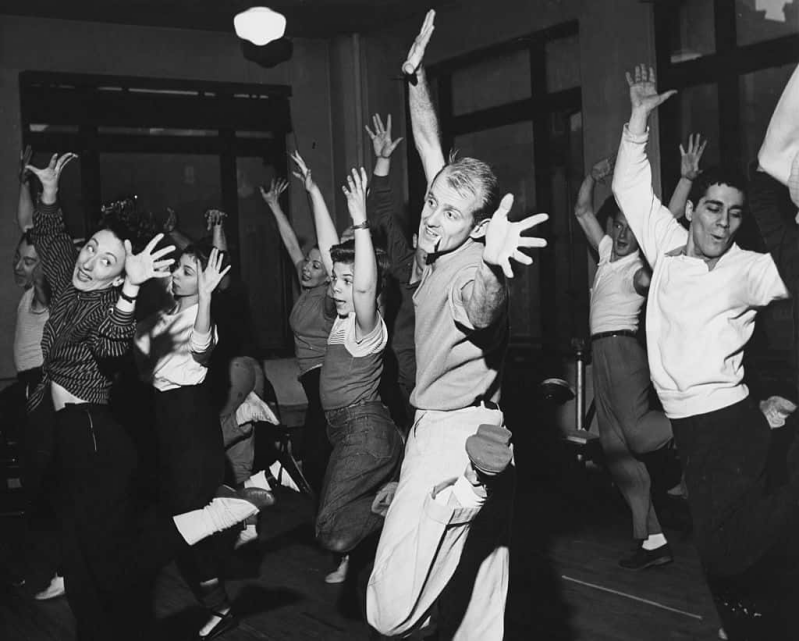
Jack Cole is often referred to as the “Father of Theatrical Jazz Dance.” He played a major role in developing jazz dance as a theatrical style and had a huge influence on dancers and choreographers who followed him.
Cole created a unique movement style by combining elements of jazz, ballet, modern dance and Indian dance, creating choreography that was energetic, rhythmic and highly stylised.
He was particularly known for his use of isolations, sharp movements, complex rhythms and strong body lines. His choreography helped establish many of the technical and performance qualities that became associated with theatrical jazz.
Cole also worked extensively in Hollywood, choreographing for films and working with performers such as Marilyn Monroe, helping bring his distinctive jazz style to a much wider audience.
His influence can be seen in the work of later choreographers, including Bob Fosse.
Bob Fosse
One of the most recognisable names in jazz choreography is Bob Fosse.
Fosse was influenced by choreographers such as Jack Cole and developed his own highly distinctive style. His choreography included turned-in legs and feet, curved or slumped posture, isolations, precise hand movements, hats and small, detailed gestures.
Rather than focusing solely on huge jumps and impressive tricks, Fosse was fascinated by the smallest details of movement. He treated his dancers almost like actors, placing huge importance on character, intention and performance.
The Importance of Detail
Fosse was famously demanding in rehearsals and could spend hours perfecting tiny movements.
A hand, wrist, elbow or the angle of a hat could completely change the way a movement looked on stage. He believed that these small details were just as important as the larger choreography.
One example of his attention to detail was his instruction for dancers to shape their hands as though they were gently holding a soft-boiled egg, creating the relaxed and curved hand position associated with his choreography.
He was also known for repetition. Dancers could repeat the same movement or section of choreography again and again until it became precise and consistent.
Turning Individual Characteristics into a Signature Style
One of the most interesting things about Fosse's work is how he embraced characteristics that traditional dance training might have considered imperfections.
Fosse was naturally pigeon-toed, meaning his feet turned inward. Rather than trying to hide this, he incorporated turned-in legs and feet into his choreography.
He also had naturally rounded shoulders. Instead of always trying to create the upright posture associated with classical ballet, he incorporated rounded shapes and shoulder movements into his distinctive style.
Fosse also began losing his hair at a young age. His use of the bowler hat became one of his most recognisable visual trademarks.
His choreography shows how individual characteristics can sometimes become the very things that make a performer or choreographer unique.
Fosse's Influence on Modern Performance (Michael Jackson)
Fosse's influence has reached far beyond musical theatre. His distinctive movement style has inspired generations of dancers and performers.
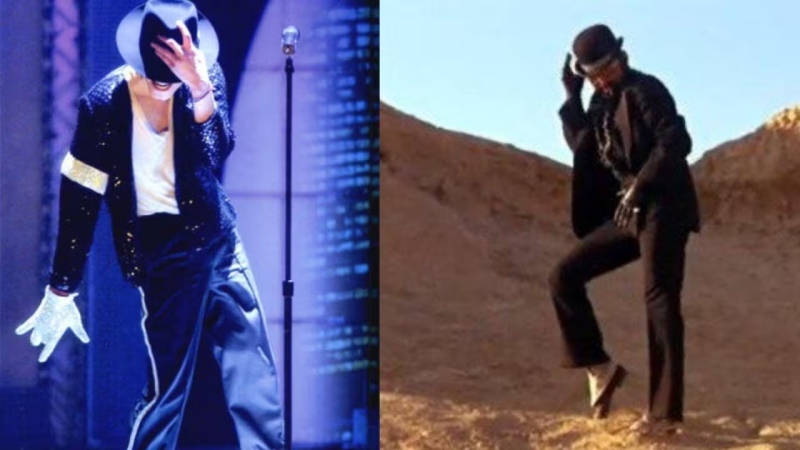
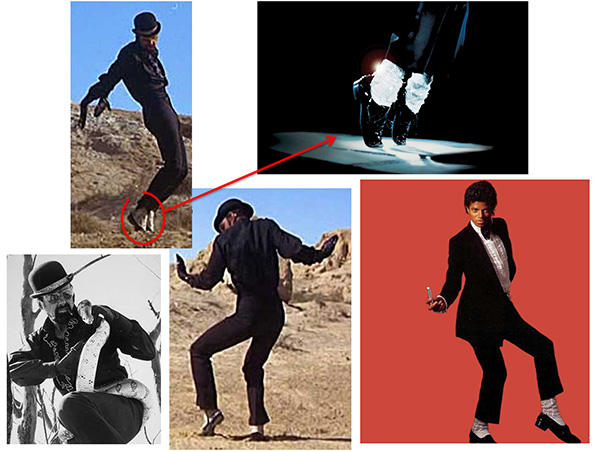
One famous performer heavily influenced by Fosse's work was Michael Jackson, who incorporated elements of Fosse's movement quality and visual style into his own performances (See pictures and video on the right).
This demonstrates just how far-reaching jazz choreography can be — influences that began in early social and theatrical dance continue to appear in popular culture today.


Their Lasting Influence
Katherine Dunham, Jack Cole and Bob Fosse each contributed something different to the development of jazz dance. Dunham highlighted the importance of African and Caribbean cultural influences, Cole helped establish jazz as a theatrical dance form, and Fosse developed a highly recognisable style based on precision, character and detailed movement.
Their work continues to influence dancers and choreographers today, showing how jazz dance has constantly evolved while remaining connected to its rich history.
Why Understanding Jazz History Matters
Learning jazz isn't just about learning kicks, turns, isolations and choreography. Understanding its history gives dancers a greater appreciation for the style they are performing.
Jazz has travelled from community dance floors to theatres, Broadway stages, Hollywood films, music videos and concert stages around the world.
Its history is complex, shaped by different cultures, communities and influential performers and choreographers. By understanding where the style comes from, dancers can develop a deeper connection to the movement and the music.
At DQ Dance Academy, we believe that learning about the history behind dance helps our students become not only stronger dancers, but more knowledgeable and confident performers too!